top of page
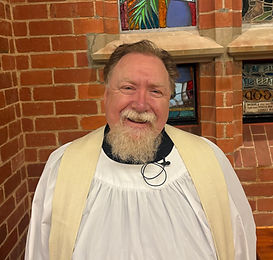
Fr Ron.jpg

Father Ron's  last day with St Nicholas is Easter Day, Sunday 5th April.  Come join with us to say farewell.  

Our Relieving Priest Fr Rogers Sermon for Sunday 22nd March:


The question is guilty or not guilty? That is usually a question for an accused person to
answer. What is the charge? Jesus of Nazareth are you a potential king?


We have come to the point in Holy Week that Jesus is on trial. The story is in the four
gospels each of which have differences. We will hear Matthew's account next Sunday
and on Good Friday, as usual, we hear John's account. We should not be surprised at the
differences as the Evangelists used information handed down over thirty to fifty years.
The evangelists also had their own perspective.


The present day various forms of media hold kangaroo courts. Some judges are
concerned about fair trials because of such publicity. The trial of Jesus looks no better
than a kangaroo court when we think of parts of it. However, the idea of Jesus being
treated shabbily at his trial denies the concern "that ideally the Sanhedrin (the supreme
court of the Jews) was organized to defend the man on trial." (Barclay Crucified and Crowned p.57)


When we put the accounts together, there is "a great deal of confusion." (Barclay p.62) Did
Jesus have one trial in six parts, or six separate trials? Two of the trials would be in the
middle of the night. John alone records what would probably be the first hearing before
Annas, a former High Priest who probably 'pulled the strings' behind the scenes.


The trial before the Sanhedrin took place in the house of Caiaphas and not in the proper
courtroom. Caiaphas had earlier expressed the opinion that it was expedient for one
man to die for the people. If Jesus was the Messiah, people claimed him to be, it would
be better for him to die and spare the people from violence. If there was a riot because
the crowd tried to make Jesus king, the Romans would respond violently.


Perhaps the Sanhedrin saw it was politically expedient even though they hated
crucifixion. The Sanhedrin needed two witnesses whose testimony agreed that would
give cause for Jesus to die. Normally witnesses were heard at separate times apart from
each other. The gospels tell us that none could be found until two gave some odd
account about the temple being destroyed and Jesus would build it in three days. Before
the council Jesus was silent to the untrue accusations.


Silence may be from anger, jealousy, hurt, conspiracy, or domination in a power game.
Those and other human traits may destroy relationships or truth. Silence also comes
from self control. It is a sign of coping with the pressures of the situation. Jesus was in
control.


The high priest asked Jesus, "tell us if you are the Messiah, the Son of God." Jesus
quoted scripture. Luke alone most likely puts the quote correctly from the book of
Daniel (Dan 7:13). "From now on the Son of Man will be seated at the right hand of the
power of God." (Luke 22:69) Matthew adds, 'the coming again of the Son of Man.'
(Matt26:64) Matthew wrote his gospel when the church expected Jesus to return within a
short time. William Barclay summarizes the reply of Jesus to Caiaphas. 'At this
moment I may seem to be in your power. The day will come when I shall be sitting in
glory on the throne of God. I shall be the judge as you will see me on the throne of
glory.' (Barclay p. 64f) So Caiaphas declares Jesus has committed blasphemy. For that he had
to die.


For Jesus to die, the Roman Governor was required to pass sentence. The Roman Empire
allowed the nations they conquered to exercise their own laws and beliefs. They reserved
to themselves the right to carry out a sentence of death. So the chief priests and elders led
Jesus to Pilate the governor.


This brings us to the fourth stage of the trial of Jesus. Matthew tells us Jesus remained
silent even before Pilate. “Jesus made no reply, not even to a single charge - to the great
amazement of the governor.” (Matt. 27:14 NIV). The Jews knew that a charge of blasphemy
would not incur the death sentence. It needed to be a political threat. Luke (23:2) tells us
that the Jews told Pilate he was a polticial agitator, [from Galilee] lied that Jesus had told
people not to pay their taxes and "that he was setting himself up as a king." (Barclay p 67)
Pilate sent him to Herod, the king of Judea. In this fifth part of the trials Herod questioned
Jesus, but received no answers. He sent him back to Pilate.


So Pilate asks Jesus, "Are you the King of the Jews? In his usual way Jesus answered the
question with a question. Did someone tell Pilate he was a king? Then Jesus talks about
his kingdom that is not from this world. The experienced governor knew Jesus couldn't be
a political insurrectionist. He said, "I find no fault in him"


Both Matthew and John tell us about a custom to release a prisoner at the Passover. So the
crowd could choose, Jesus or Barrabas who was a political agitator. They wanted Barrabas
the Brigand, the insurrectionist.. They declared Jesus was not their King, only Caesar was
their king. They cried out, "Crucify." So Pilate handed him over to be crucified and
washed his hands. Not guilty.


Guilty say the Jews, on a charge of blasphemy. But they present a political case to Pilate.
Not guilty says Pilate. We could call it a hung jury. So how do we see it? We realize we
know the outcome of the whole event, not just the trial and crucifixion but also the
resurrection of Jesus. Before the event we have words from Jesus speaking of God's
kingdom and doing the will of the Father, God.


He had said to his followers, “Anyone who puts his hand to the plough and keeps looking
back is unfit for the kingdom of God.” (Lk. 9:62) In his humanity Jesus may have been
tempted to do the same. Gethsemane shows us the struggle Jesus had to do God's will.
Jesus was sent into the world, came into the world, for a purpose. Jesus had said, "When I
am lifted up from the earth, I will draw all people to myself." (Jn. 12:32) How could that
happen? Through the courts of the Jews and the Roman governor. Jesus would go on his
course for all its agony until the great cry, “It is finished.” (Jn.19:30) and the quiet trustful,
“Father, into your hands I commit my spirit.” (Lk. 23:46)


The response of the centurion at the foot of the cross is expressed by Luke writing for the
Gentiles: "Certainly this man was innocent." Matthew, faithful to his Jewish readers,
"Truly this man was God's Son!" For us, whatever we might think of the human courts, it is
an act of faith that in the trials and crucifixion of Jesus, God himself brought us salvation.


Year A Lent 5 2.3.2026 St Nicholas, Mordialloc Revised address
the King in Holy Week - Guilty or Not Guilty

The Reverend A R Wood

Previous Sermon's from Fr Roger: 

22 02 2026, 01 03 2026, 08 03 2026 15 03 2026

bottom of page